Source review: 18 October 2026. Updated using public official documentation. This is not a hands-on app test or a report of a personally witnessed incident.
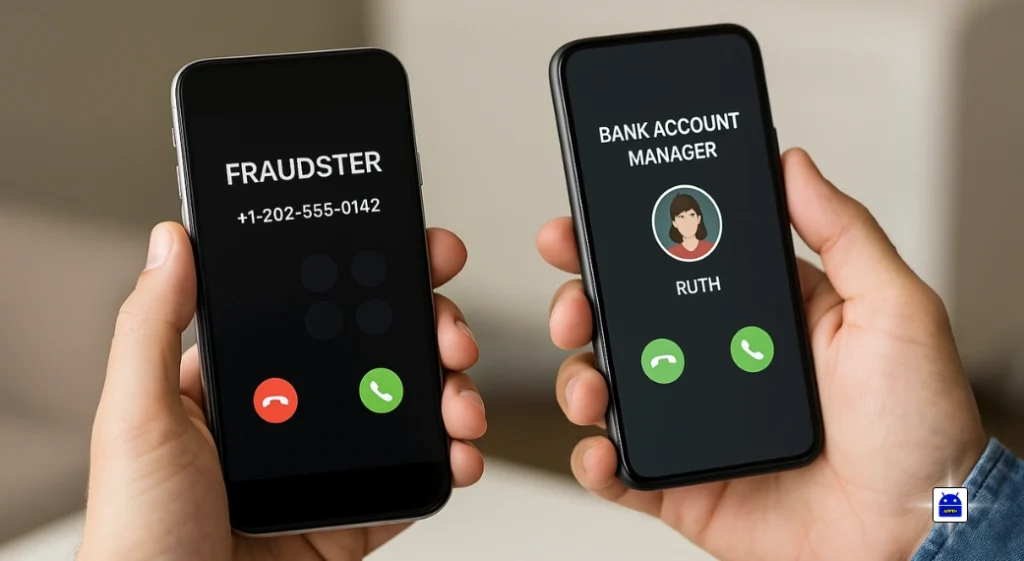
A free call spoofing service may advertise calls that display a different number. That does not prove the service is free, private, lawful for your purpose or able to protect you from fraud. Caller ID is a display signal, not proof of who is speaking.
This guide explains the difference between hiding your number, using an authorized business number and impersonating somebody else. It also covers what to do when a suspicious caller appears to use a familiar number.
The earlier article included unsupported hands-on testing, security guarantees and claims that changing caller ID avoids premium-call charges. Those claims have been removed. We have not verified a free spoofing provider and do not offer a download or instructions for impersonating another person.
Quick overview
| Question | Practical answer |
| Is caller ID proof of identity? | No; verify important requests independently |
| Does changing caller ID remove call charges? | No; billing depends on the service and destination |
| Is a hidden number the same as spoofing? | No; withholding and falsifying a displayed number differ |
| Need business privacy? | Ask your provider about a number you control |
| Suspected fraud in India | Use Sanchar Saathi Chakshu |
| Already lost money in India | Contact your bank and report through 1930 or cybercrime.gov.in |
Contents: What caller ID spoofing means · Why free and anonymous claims need checking · Safer ways to separate personal and business calls · Legal claims should be narrow · How to respond to a suspicious caller · Reporting options in India and the US · FAQ · How to uninstall an unwanted calling app
What caller ID spoofing means
The FCC describes spoofing as deliberately changing transmitted caller ID information to disguise the caller. A number resembling your local area or a trusted organization can therefore appear on a call that did not come from that organization.
Withholding a number, so the recipient sees an unknown or private caller, is different. Another distinct case is a business presenting its own authorized callback number. These situations should not be grouped under a promise to call from any number anonymously.
A name or photo shown by a calling app is also not enough to approve a payment or share account access. Separate what the screen displays from evidence that the person is authorized to make the request.
Why free and anonymous claims need checking
A free installation may come with trial credits, paid minutes or a renewal. Before using any calling service, read the price for the destination, billing conditions and refund process. Do not enter payment details merely to unlock an unexplained free call.
Changing the number displayed to a recipient does not itself change the bill for reaching that destination. It is not a way to safely return an unfamiliar premium-rate missed call. If you do not recognize the caller, verify their reason for contacting you first.
Likewise, a hidden display is not a guarantee that a provider keeps no records. Check who operates the service and its privacy policy. Avoid treating words such as encrypted or anonymous as an independent security audit.
Safer ways to separate personal and business calls
If your goal is to keep a personal number separate from work, ask your carrier or business phone provider about a dedicated number and approved outbound caller ID. Use a number you control and can receive callbacks on.
For a one-off conversation, an agreed in-app call may meet the need without publishing a personal number widely. Review what account information the other person will see before calling. The other person should know who is contacting them.
For internal testing, use an authorized test environment and agreed participants. Do not surprise customers or third parties with a simulated bank, government or emergency call. A privacy need does not require pretending to be someone else.
Legal claims should be narrow
The FCC’s US guidance prohibits misleading caller ID used with intent to defraud, cause harm or wrongfully obtain something of value, while recognizing legitimate uses. That is not a blanket approval for every prank, service or country.
Rules can depend on jurisdiction, purpose and the communications involved. This page does not certify a service as legal in India, the US or Europe. For a business deployment, obtain advice appropriate to the service and the places you call.
We have removed the previous broad legal tables and fixed penalty promises. A marketing label such as ethical use does not establish that a specific action complies with applicable rules.
How to respond to a suspicious caller
The FTC warns that scammers can fake caller ID and pose as trusted organizations. End the call if you are pressured to act, then use contact details you independently obtain from the organization’s official website or your existing account documents.
Do not give an unexpected caller your password, OTP, bank credentials or remote access to your device. Be especially cautious about instructions to move money to protect it or pay urgently to avoid a threat.
Write down the time, what the caller claimed and any callback number they supplied. Keep relevant messages privately. Do not publicly accuse the subscriber of the displayed number: the number itself may have been copied.
Reporting options in India and the US
India’s Department of Telecommunications advises reporting suspected fraudulent communications through Chakshu on the Sanchar Saathi portal. Its advisory says DoT and TRAI do not authorize callers to threaten mobile disconnection in the manner described in that warning.
If you have already become a victim of cybercrime or financial fraud in India, the advisory directs you to 1930 or the National Cyber Crime Reporting Portal. Contact your bank promptly if money or banking access is involved. Reporting is not a guarantee of recovery.
In the US, the FCC complaint page includes unwanted calls and a specific option for your own number being spoofed. The FCC explains that complaints inform its work; it does not resolve every individual unwanted-call complaint.
Keep the complaint reference and factual details. Clearly distinguish the displayed number from the person’s unverified claimed identity so the report does not imply more than you know.
FAQ
Which free spoofing app is verified here? None. This guide does not endorse a provider or promise free credits.
Can spoofing stop premium-rate charges? Changing a displayed identity does not remove destination or service charges.
Does my number appearing on somebody’s phone prove my account was hacked? No. It may be spoofing; investigate unexpected account activity separately with your provider.
Can a caller ID app identify every scam? Do not rely on a label alone. Verify sensitive requests through an independent channel.
How to uninstall an unwanted calling app
On Android, open the app’s information page and choose Uninstall, or use Google Play’s Manage apps & devices section. Review permissions before removal if you need to understand what access you granted.
Cancel any paid subscription through the billing provider separately. If you disclosed credentials, change them through the genuine service and review account activity; removing an app alone does not undo information already shared.
Choose a calling method that meets your actual privacy need. Clear identity, transparent charges and independent verification are more useful than a promise to call from any number.
Sources and update policy
Official sources reviewed: FCC caller ID and unwanted-call guidance; FTC phone scam guidance; DoT advisory; Chakshu reporting; National Cyber Crime Reporting Portal; FCC complaint options; Android permissions; Android uninstall help.
We revise this guide when verified documentation changes or a correction is needed. App features and support screens can vary by version, device and region. We distinguish publisher claims from our practical guidance and do not invent tests, incidents or guarantees. This page is informational; contact the relevant provider or authority for an individual case.
More Articles You May Like