Not every earning app is a scam. Not every earning app is worth your time either. This guide explains the difference.
Quick Answer (30 Seconds)
Can you earn ₹100 per day without investing money through mobile apps?
Yes—but not in the way many advertisements make it sound.
Some legitimate apps allow users to earn small rewards by completing tasks such as watching rewarded videos, answering surveys, testing apps, shopping through cashback programs, playing selected games, or referring new users. On active days, reaching around ₹100 may be possible for some users. On other days, you might earn much less—or nothing at all.
The biggest mistake is assuming “without investment” means “without effort.”
You may not spend money, but you’re still investing something valuable: your time, internet data, phone battery, attention, and occasionally your personal information.
That’s why this guide doesn’t simply recommend apps. Instead, it helps you understand how earning apps actually work, which ones deserve your attention, and which warning signs should make you walk away before wasting your time.
If you’ve searched for daily ₹100 earning apps without investment, you’ve probably noticed something strange.
Almost every website promises the same thing.
- Earn ₹500 every day.
- Instant withdrawal.
- No work required.
- Guaranteed income.
- Unlimited earning.
At first glance, those claims sound exciting.
But after spending time researching earning apps, reading developer information, studying user feedback, and comparing how different reward systems operate, one thing becomes clear:
Most people are asking the wrong question.
The real question isn’t:
“Which app pays ₹100?”
The better question is:
“Which apps have a realistic chance of helping me earn extra money without asking me to spend money first?”
That small change completely changes how you evaluate an earning app.
Throughout this guide, we’ll focus on realistic expectations rather than exaggerated promises.
Table of Contents
Why So Many People Search for ₹100 Per Day
Interestingly, ₹100 isn’t a random number.
For many users, especially students, homemakers, part-time workers, and people exploring online side income, ₹100 feels achievable.
It’s enough to:
- recharge mobile data
- pay for small digital subscriptions
- cover local transport
- buy a meal
- save gradually over time
Unlike advertisements claiming ₹5,000 or ₹10,000 per day, ₹100 feels believable.
That is exactly why this keyword has become so popular.
Unfortunately, many websites exploit that trust.
Instead of helping users understand earning apps, they simply publish long lists copied from other websites.
Very few stop to explain something much more important:
Why do some users actually earn while others uninstall the same app after two days?
The answer has very little to do with luck.
The Biggest Misunderstanding About “Without Investment”
Most people interpret without investment as:
“I don’t have to spend any money.”
Technically, that’s true.
But money isn’t the only investment people make.
Every earning app asks you to exchange something.
Sometimes it’s obvious.
Sometimes it isn’t.
Here’s what you’re usually investing even when the app is free.
Your Time
Many reward systems are designed around small tasks.
Watching advertisements.
Completing surveys.
Installing another app.
Playing games for a certain period.
Reading promotional content.
Individually these activities seem short.
Together they can consume a surprising amount of time.
Your Mobile Data
Rewarded videos don’t appear from nowhere.
Every advertisement uses internet bandwidth.
If you’re on limited mobile data, your earning may partly be offset by your internet costs.
This isn’t necessarily a bad trade-off—but it’s something many articles never mention.
Your Phone Battery
Continuous video playback, gaming tasks, and frequent app usage naturally increase battery consumption.
For someone using an older smartphone, that extra usage may matter more than the rewards earned.
Your Attention
This is perhaps the most overlooked investment.
Many earning apps compete for your daily attention.
Daily bonuses.
Spin wheels.
Limited-time offers.
Streak rewards.
Countdown timers.
Referral milestones.
These features encourage users to return regularly.
Some genuinely increase engagement.
Others simply keep users opening the app without adding much earning value.
Understanding this difference helps you decide whether an app is rewarding your effort—or simply your attention.
Your Personal Information
Not every earning app asks for the same details.
Some require only basic account creation.
Others may request:
- phone number
- email address
- payment information
- identity verification
- location access
None of these automatically indicate a problem.
However, before sharing personal information, users should understand why the app needs it and whether the explanation makes sense for the service being offered.
How Do Earning Apps Actually Make Money?
Here’s something surprisingly few articles explain.
If an app is paying users, where does that money come from?
No company can continuously pay thousands of users without generating revenue somewhere else.
Understanding this business model is one of the easiest ways to judge whether an earning app looks realistic.
Most legitimate earning apps earn money through one or more of the following methods.
Advertising Revenue
This is one of the most common models.
Advertisers pay the app owner whenever users watch rewarded advertisements.
The app shares a small portion of that advertising revenue with users.
This explains why many apps ask users to watch videos before earning points.
Market Research
Survey companies need opinions from real consumers.
Instead of contacting individuals directly, they work with survey platforms.
When a user successfully completes a survey, the research company pays the platform.
The platform then shares part of that payment with the user.
Affiliate Partnerships
Some earning apps recommend products, services, bank accounts, shopping websites, or financial tools.
If users sign up through those recommendations, the app may receive a commission.
Part of that commission can be shared with users.
Cashback Programs
Cashback isn’t exactly free money.
Instead, retailers share part of their sales commission with cashback platforms.
The platform then passes some of those savings back to users.
Referral Growth
Many apps reward existing users for inviting friends.
This isn’t automatically a warning sign.
Referral programs are common across many legitimate businesses.
However, if referrals become the only practical way to earn, users should carefully consider whether the app offers enough value without constantly recruiting others.
A Simple Reality Check
Before installing any earning app, ask yourself one question.
If this app removed its referral program tomorrow, would people still use it?
That’s an incredibly revealing question.
If the answer is “yes,” the app probably provides some independent value.
If the answer is “no,” it’s worth taking a closer look before investing your time.
The “₹100 Test” That Most Articles Never Discuss
Instead of asking:
“Can this app pay ₹100?”
Try asking:
“Can an average new user, starting today, realistically reach ₹100 without depending entirely on referrals?”
Notice the difference.
This version considers:
- available tasks
- earning consistency
- withdrawal rules
- user effort
- practical experience
rather than simply repeating the highest number shown in advertisements.
That small shift in thinking helps separate realistic opportunities from unrealistic marketing.
Before We Start Reviewing Apps…
In the next section, we’ll evaluate each earning app using the same transparent criteria instead of relying on download counts or promotional claims.
We’ll look at:
- what the app actually offers,
- who it is best suited for,
- how users earn,
- whether the earning method appears sustainable,
- potential drawbacks,
- privacy considerations,
- and whether it’s realistic for someone aiming to earn around ₹100 without paying upfront.
That consistent approach makes comparisons much more meaningful than simply ranking apps from one to ten.
How We Evaluated Every Earning App
Most websites rank earning apps using download numbers, star ratings, or sponsored partnerships.
We didn’t.
Those numbers can be helpful, but they don’t answer the question most people actually care about:
“Is this app worth my time?”
A million downloads don’t guarantee a good experience. Likewise, a newer app with fewer users isn’t automatically unreliable. That’s why every app in this guide is evaluated using the same practical criteria—focused on the experience of an ordinary user rather than promotional claims.
Our 7-Point Reality Check
Before considering any earning app, we asked seven simple questions.
1. Does it ask for money before you can earn?
This was the first filter.
If an app requires users to purchase a membership, recharge an account, deposit money, or unlock tasks through payment, it no longer fits the idea of earning without investment.
Legitimate reward platforms usually allow users to begin with free tasks, even if earnings start small.
2. Is the earning method clearly explained?
Some apps openly explain how users earn:
- watching rewarded advertisements
- completing surveys
- cashback shopping
- trying partner apps
- referrals
Others simply promise “Earn Unlimited Money.”
That difference matters.
When an app never explains where the rewards come from, it’s difficult for users to judge whether the business model is sustainable.
Transparency is often a better indicator than flashy earning claims.
3. Can an ordinary user earn without inviting friends?
Referral programs aren’t a problem by themselves.
Many well-known apps reward referrals.
The concern begins when referrals become the only practical way to earn meaningful rewards.
A useful earning app should still provide value to users who prefer not to invite others.
4. Are withdrawal methods clearly mentioned?
An earning balance means very little if users can’t easily withdraw it.
We looked for clear information about:
- supported payment methods
- minimum withdrawal requirements
- available countries
- whether rewards are cash or gift cards
Apps that leave these details unclear naturally require more caution.
5. Does the app ask for reasonable permissions?
Permissions should match the app’s purpose.
For example:
A cashback app may reasonably request notification access.
A survey app may request basic profile information.
However, if an app requests permissions that appear unrelated to its core functionality, users should understand why those permissions are needed before granting access.
Good privacy practices begin with asking simple questions.
6. Is the earning opportunity likely to continue?
One overlooked detail is earning consistency.
Some apps reward new users generously during the first few days but provide fewer opportunities later.
Others may offer smaller rewards but continue providing tasks over a longer period.
For users looking for occasional side income rather than a one-time bonus, consistency is often more valuable than a large welcome reward.
7. Would we recommend it to a family member?
This final question may sound simple, but it brings everything together.
If an app relies on unrealistic marketing, hides important information, or creates unnecessary confusion, we wouldn’t feel comfortable recommending it—even if it advertises attractive rewards.
Trust is built over time, not through promotional banners.
What Actually Determines Whether You Earn ₹100?
This is where many articles stop.
They simply list apps and move on.
But after comparing dozens of earning platforms, one pattern becomes obvious:
The app itself is only one part of the equation.
Several other factors influence how much users may actually earn.
1. Your Country Matters More Than Most People Realize
Many reward platforms don’t offer identical opportunities worldwide.
Survey availability.
Advertising rates.
Cashback campaigns.
Reward values.
All of these often vary by country.
An app that performs well in one region may offer very limited opportunities somewhere else.
That’s why reading reviews from users in your own country can be more useful than looking at the overall rating.
2. Time of Day Can Affect Available Tasks
Some reward systems refresh tasks periodically.
If you open an app immediately after completing your daily bonus, there may be nothing else available.
Checking later in the day could present new opportunities.
This doesn’t guarantee higher earnings, but it explains why two users can report completely different experiences with the same app.
3. Consistency Often Beats Long Sessions
Many earning apps reward users for returning regularly rather than spending several hours in one sitting.
Daily check-ins.
Small bonuses.
Limited-time tasks.
Streak rewards.
These features encourage gradual engagement.
Ironically, spending thirty minutes every day may sometimes produce better long-term results than spending four hours once a week.
4. Referral Income Can Distort Expectations
One reason earnings reported online vary so dramatically is referrals.
A user with a large social media following may earn significantly more than someone using the same app privately.
When you see impressive earning screenshots, it’s worth asking:
Were those rewards earned through tasks—or mostly through referrals?
The answer isn’t always obvious.
App Review: Student Work
Category: Reward & Task App
Primary Audience: Users in Pakistan
Free to Start: Yes, according to the Play Store listing
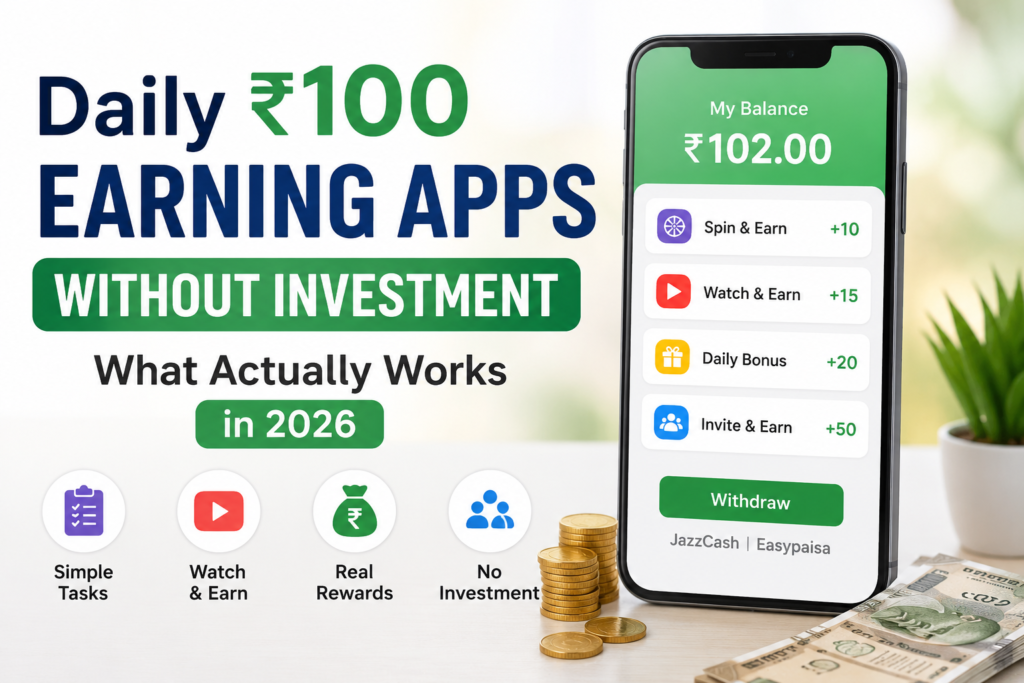
Main Activities: Daily tasks, rewarded videos, spins, referrals
Student Work presents itself as an app designed to help users earn rewards by completing simple activities rather than making financial investments.
According to its Google Play description, users can create an account using their mobile number and begin accessing several task types, including daily spins, rewarded video viewing, daily bonuses, and referral rewards.
The developer states that users may earn up to Rs. 50–100 per day.
That wording is important.
The listing says “up to”, not “guaranteed.”
Actual earnings depend on the number of available tasks, successful completion, user activity, and any withdrawal requirements that may apply.
How Student Work Says Users Earn
Based on the Play Store description, earning opportunities include:
- Daily Spin
- Watch & Earn
- Daily Bonus
- Invite & Earn
Each method follows a slightly different reward system.
Daily spins introduce an element of chance.
Rewarded videos depend on advertising availability.
Daily bonuses encourage consistent usage.
Referral rewards depend on inviting new users.
Together, these create multiple earning opportunities instead of relying on just one feature.
Withdrawal Options
The developer currently lists:
- JazzCash
- Easypaisa
These payment methods primarily serve users in Pakistan.
For readers outside Pakistan, this is an important limitation because local withdrawal support may not be available.
What We Like
Rather than promising impossible income figures, the app focuses on relatively simple activities that many users already understand.
The interface appears designed around straightforward tasks rather than requiring purchases before participation.
Multiple earning methods may also provide more flexibility than apps that rely entirely on referrals.
Things Users Should Understand Before Installing
Although the earning methods appear simple, there are several practical considerations.
The availability of rewarded videos can change.
Daily bonuses alone are unlikely to produce significant earnings.
Referral income may differ greatly between users.
Most importantly, the developer’s earning estimate should be viewed as a possibility rather than an expectation.
Like many reward-based platforms, results will vary depending on activity levels and available tasks.
Our Assessment
Instead of asking,
“Can Student Work pay ₹100 every day?”
A more useful question is:
“Does Student Work provide multiple legitimate ways to accumulate small rewards over time?”
Based on the information publicly provided by the developer, the answer appears to be yes, but users should approach any earning estimates with realistic expectations and verify withdrawal conditions before investing significant time.
Quick Comparison
| Feature | Student Work |
|---|---|
| Free to join | Yes (according to the listing) |
| Upfront investment | Not mentioned as required |
| Daily tasks | Yes |
| Rewarded videos | Yes |
| Daily bonus | Yes |
| Referral program | Yes |
| Withdrawal methods | JazzCash, Easypaisa |
| Region | Primarily Pakistan |
| Earnings guaranteed? | No |
A Question Worth Asking Before Installing Any Earning App
Instead of downloading an app immediately after seeing a high earning claim, ask yourself this:
If the earning banner disappeared tomorrow, would this app still feel transparent enough for me to trust?
That single question often reveals more than download counts, promotional videos, or social media screenshots.
Hidden Limitations of Daily ₹100 Earning Apps That Most Websites Never Explain
If you’ve read this far, you’ve probably noticed something different about this guide.
We haven’t tried to convince you that every earning app is amazing.
That’s intentional.
The reality is that most users don’t stop using earning apps because they’re fake—they stop because their expectations don’t match how these platforms actually work.
Understanding those limitations before installing an app can save hours of frustration later.
1. The First Day Is Often the Most Rewarding
Many apps welcome new users with:
- sign-up bonuses
- extra spins
- beginner tasks
- welcome rewards
- temporary promotions
This creates a great first impression.
However, after those introductory rewards disappear, users often discover that regular tasks provide much smaller earnings.
This doesn’t necessarily mean the app is dishonest.
It simply means that new-user rewards shouldn’t be mistaken for long-term earning potential.
When evaluating an app, ask yourself:
“Would I still use this app after the welcome bonus ends?”
If the answer is no, the app may not fit your long-term goals.
2. “Daily” Doesn’t Always Mean Every Single Day
This is one of the most misunderstood words in earning app advertisements.
An app may advertise:
Daily Rewards
That doesn’t automatically mean:
₹100 every day.
Sometimes “daily” simply means:
- daily login bonuses
- daily spins
- daily check-ins
- daily chances to earn
Whether those activities add up to ₹100 depends on many factors, including task availability, user eligibility, and reward values.
That’s why two people using the same app can have completely different experiences.
3. Reward Availability Can Change Without Notice
Unlike traditional jobs, earning apps don’t usually provide a fixed amount of work every day.
One week may include plenty of surveys or rewarded videos.
The following week could have very few.
This happens because many earning opportunities come from advertising campaigns, research companies, or promotional partnerships.
When demand changes, available tasks often change too.
4. More Time Doesn’t Always Mean More Money
This surprises many new users.
Spending four hours inside an earning app doesn’t automatically produce four times the rewards.
Some activities have daily limits.
Some advertisements stop appearing.
Some surveys reach participant limits.
After a certain point, continuing to refresh the app may not generate additional opportunities.
Knowing when to stop is often just as important as knowing when to start.
5. Minimum Withdrawal Requirements Matter
Imagine earning small rewards over several days.
Everything looks encouraging.
Then you discover that withdrawals begin only after reaching a specific balance.
That’s why minimum withdrawal requirements deserve attention before investing your time.
Whenever possible, check:
- minimum payout amount
- supported payment methods
- processing time
- account verification requirements
These details affect the overall experience far more than attractive earning advertisements.
Privacy Analysis: What Information Are You Really Sharing?
Many users pay close attention to earnings but spend very little time reviewing privacy practices.
That’s understandable.
Privacy policies aren’t exciting reading.
But they’re often more important than the reward system itself.
Information You May Be Asked to Provide
Depending on the platform, earning apps may request:
- name
- email address
- phone number
- payment details
- country
- age
- device information
Some of this information helps verify users or process rewards.
The important question isn’t whether information is collected.
It’s whether the app clearly explains why it’s needed.
Be Careful With Unnecessary Permissions
Before accepting permissions, ask yourself:
Does this permission make sense for the app’s purpose?
For example:
A cashback app requesting notification access may have a reasonable explanation.
A rewards app requesting your microphone without explaining why deserves closer attention.
Always review permission requests before accepting them.
Check the Privacy Policy
Many users never open it.
You don’t need to read every line.
Instead, look for answers to simple questions:
- What information is collected?
- How is it used?
- Is it shared with third parties?
- Can you delete your account later?
Clear answers often indicate a more transparent platform.
Safety Analysis: How to Recognize Warning Signs
Not every low-quality app is a scam.
But some warning signs deserve attention.
Unrealistic Income Claims
If an app promises:
- ₹5,000 every day
- guaranteed earnings
- instant riches
- zero effort
be cautious.
Legitimate platforms usually explain that earnings depend on completed tasks rather than making promises.
Upfront Payments
This article focuses on apps without investment.
If an app asks users to:
- recharge first
- purchase a membership
- unlock earning levels through payment
take time to understand exactly why before proceeding.
A free reward platform shouldn’t require unexpected payments just to begin.
Pressure to Recruit Others
Referral rewards are common.
However, if every meaningful reward depends on inviting more users while normal tasks provide almost nothing, think carefully about whether the platform offers genuine value on its own.
Poor Transparency
Before trusting an app, see whether it clearly explains:
- earning methods
- withdrawal rules
- support channels
- privacy practices
The less information provided, the more cautious users should be.
Performance Review: Beyond Speed and Design
Many reviews focus only on whether an app is fast.
Performance is actually much broader.
Stable Experience
An earning app should allow users to complete tasks without frequent crashes or endless loading screens.
Interrupted tasks may result in lost rewards.
Easy Navigation
A good interface makes it obvious:
- where to find tasks
- where rewards appear
- how withdrawals work
- where account information is stored
Users shouldn’t have to search through multiple menus just to understand basic features.
Clear Progress Tracking
One overlooked quality feature is progress visibility.
Good apps clearly show:
- completed tasks
- pending rewards
- available bonuses
- reward history
This helps users understand whether their efforts are producing meaningful results.
The Psychology Behind Earning Apps
This is something surprisingly few reviews discuss.
Many earning apps borrow ideas from mobile games.
Not to deceive users—but to encourage regular engagement.
Examples include:
- daily streaks
- spinning wheels
- surprise bonuses
- countdown timers
- achievement badges
- limited-time offers
These features can make the experience enjoyable.
However, they also encourage users to return repeatedly, even when actual rewards remain small.
Recognizing these design choices helps users make more informed decisions about how much time they wish to invest.
Common Mistakes New Users Make
After comparing many earning platforms, several patterns appear repeatedly.
Expecting Immediate Income
Small rewards usually build gradually rather than appearing instantly.
Ignoring Withdrawal Rules
Always understand payout conditions before spending significant time.
Installing Too Many Apps
Managing several reward platforms simultaneously often becomes confusing.
Testing one or two carefully is usually more practical than installing ten at once.
Sharing Personal Information Too Quickly
Read permission requests carefully.
Only provide information that seems appropriate for the app’s purpose.
Believing Every Screenshot
Images showing large earnings rarely explain:
- how long they took
- whether referrals contributed
- whether bonuses were included
- whether withdrawals succeeded
Context matters.
Expert Recommendations
If your goal is simply to explore earning apps responsibly, consider these practical suggestions:
✔ Choose apps with clear earning methods.
✔ Read recent user reviews instead of relying only on overall ratings.
✔ Verify available withdrawal methods before spending time.
✔ Treat referral bonuses as optional rather than essential.
✔ Protect your personal information by reviewing permission requests carefully.
✔ Set realistic expectations. Even genuine earning apps are generally designed to provide supplementary income rather than replace a regular job.
Frequently Asked Questions
Can I really earn ₹100 every day without investment?
Some users may reach around ₹100 on certain days, depending on available tasks, location, referrals, and time spent. However, no legitimate app can guarantee that every user will earn the same amount daily.
Are earning apps free to use?
Many are free to install and begin using. However, “free” doesn’t mean there are no costs—you still spend time, internet data, battery life, and attention.
Is referral income required?
Not always. Some apps offer surveys, rewarded videos, cashback, or daily tasks without requiring referrals. Referral programs simply provide an additional earning option.
Should I trust apps with extremely high earning claims?
Approach such claims carefully. It’s better to choose platforms that clearly explain how rewards are generated rather than focusing only on the highest advertised numbers.
Can students use earning apps?
Students often explore earning apps for small supplementary income. Before installing any app, they should review its privacy practices, understand the earning model, and ensure it doesn’t interfere with studies or other responsibilities.
Final Words
The phrase “daily ₹100 earning app without investment” creates an appealing promise, but the reality is more nuanced.
Some apps genuinely reward users for completing simple activities such as surveys, rewarded videos, cashback shopping, or referrals. For certain users, earning around ₹100 on active days may be achievable. For others, available tasks, regional restrictions, or withdrawal requirements may result in much lower earnings.
The smartest approach isn’t to chase the biggest advertised number.
Instead, look for apps that are transparent about how they generate revenue, explain their withdrawal process clearly, request only relevant permissions, and set realistic expectations from the beginning.
Ultimately, the best earning app isn’t necessarily the one that promises the highest reward. It’s the one that respects your time, protects your privacy, communicates honestly, and provides a consistent experience over the long term.
Before installing any app, remember one simple principle:
If you understand how the app earns money, you’ll be in a much better position to judge whether it’s worth your time.
That single habit can help you make more informed decisions—not just for earning apps, but for almost any digital service you use.