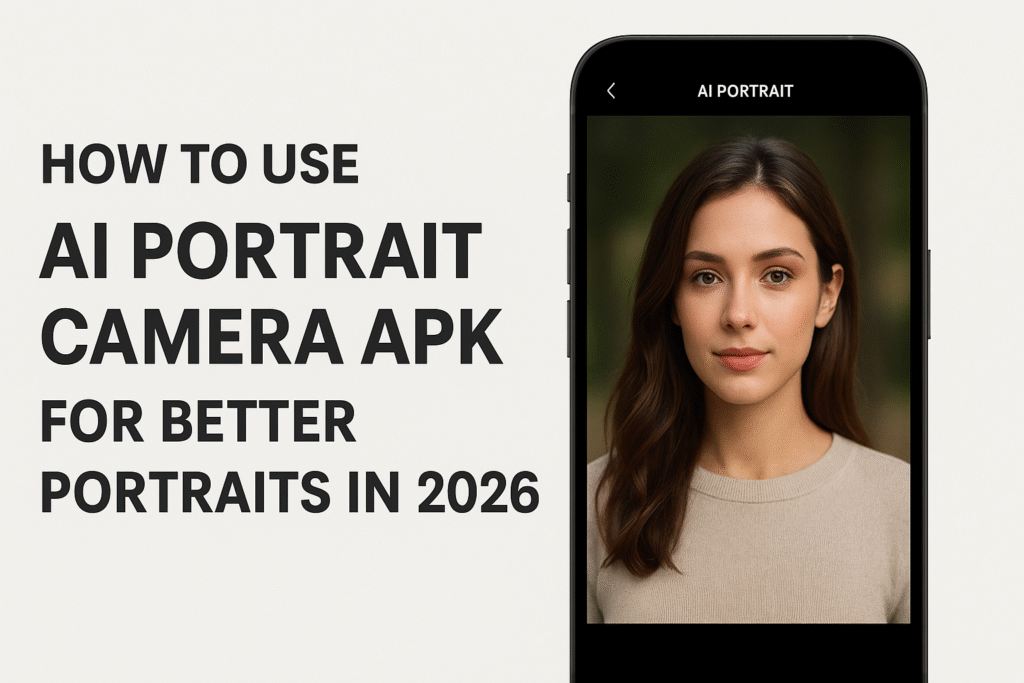
Smartphone camera technology has evolved dramatically over the last decade. What once relied on basic sensors and simple software is now powered by advanced artificial intelligence. AI helps smartphones detect scenes, enhance lighting, separate subjects from backgrounds, and create DSLR-style portraits instantly. One emerging trend is the AI Portrait Camera—an app that uses machine learning to deliver high-quality portraits with professional effects. This article explains how an AI Portrait Camera APK works, its features, benefits, risks, and how to use it wisely in 2026.
Table of Contents
What Is an AI Portrait Camera App?
An AI portrait camera app enhances portrait photography by analyzing the scene, detecting faces, and automatically adjusting settings. Unlike a regular camera app that simply captures what is in front of the lens, AI portrait apps:
- Identify faces, pets, objects, and backgrounds.
- Adjust exposure, focus, white balance, sharpness, and color.
- Apply effects such as background blur, beauty retouching, filters, and low-light enhancement.
Modern AI camera apps can also blur the background like a DSLR, apply real-time filters, and provide manual controls to fine-tune the portrait.
How Does an AI Portrait Camera Work?
1. Scene Analysis and Face Detection
The app scans the frame and identifies facial landmarks such as eyes, nose, lips, and jawline. It may also detect additional objects like pets or food.
2. Depth Estimation and Segmentation
To create bokeh (background blur), the app separates the subject from the background by estimating depth, even without a dedicated depth sensor.
3. Automatic Camera Adjustments
The app adjusts focus, exposure, white balance, and color tones so the face remains properly lit and sharp. Smart autofocus tracks moving subjects and keeps the eyes in focus.
4. Portrait Effects and Post-Processing
After capturing the image, the app enhances it by applying:
- Background blur
- Beauty retouching
- Noise reduction
- Tone adjustments
- Low-light improvements
5. Optional Features
Some apps also provide:
- Document scanning
- Artistic backgrounds
- Object/text recognition
- Gesture or voice-based shutter controls
Key Features of AI Portrait Camera Apps
Scene Detection
Automatically recognizes scene types and adjusts camera settings accordingly.
Smart Auto-Focus
Keeps faces and eyes sharp, even when subjects move.
Real-Time Filters
Gives a live preview of brightness, contrast, color balance, and artistic styles.
Background Blur (Bokeh)
Separates foreground and background to produce a professional shallow depth-of-field effect.
Beauty Mode & Retouching
Smooths skin, brightens eyes, reduces blemishes, and enhances facial features without needing manual editing.
Low-Light Optimization
Brightens shadows, reduces noise, and recovers details in dark environments.
Gesture & Voice Control
Triggers the camera without touching the phone—useful for group photos or selfies.
Object & Text Recognition
Scans documents and identifies objects for easy organization and editing.
Manual Adjustments
Adjust blur intensity, focus point, exposure, and color tones for creative control.
Potential Benefits
Ease of Use
Ideal for beginners who want high-quality portraits without learning manual photography.
Professional-Looking Results
Creates DSLR-style images with sharp subjects and beautifully blurred backgrounds—great for social media and content creation.
Improved Low-Light Shooting
AI reduces noise and enhances brightness in dim environments like restaurants or concerts.
Real-Time Feedback
Users can preview how filters and effects will look before taking the photo.
Versatility
Many apps include all-in-one tools for shooting, editing, scanning, and retouching.
Risks and Considerations
1. Privacy and Permissions
AI camera apps may request access to the camera, microphone, storage, and sometimes location. Be cautious if the app asks for unrelated permissions.
2. Security of APK Files
Downloading APKs outside official app stores bypasses safety checks. Modified APKs may contain harmful code or spyware.
3. Battery Drain and Heat
Real-time AI processing consumes CPU power, which may reduce battery life and generate heat, especially on older devices.
4. Over-Processing
Heavy beauty filters and HDR effects may create artificial images.
Use these tools lightly to maintain a natural look.
5. Ads and Subscription Costs
Many apps follow a freemium model. Premium features like HD export or ad-free usage typically require a subscription.
When to Use an AI Portrait Camera App
Social Media & Content Creation
Ideal for influencers and users who want polished portraits quickly.
Events and Celebrations
Great for weddings, parties, and outdoor events where portrait clarity and background blur improve aesthetics.
Low-Light Photography
Enhances indoor dinners, night walks, concerts, and evening events.
Fast On-Device Editing
Useful when you need to retouch photos without using desktop software.
When to Avoid or Be Careful
- When privacy is highly important.
- When your device has low storage or RAM.
- When conserving battery is essential.
- When you prefer natural, unprocessed photography.
Tips for Getting the Best Results in 2026
✔ Clean the Lens
Even slight smudges reduce image clarity.
✔ Use Natural Light
Natural lighting creates softer shadows and realistic skin tones.
✔ Enable Grid Lines
Helps with composing shots using the rule of thirds.
✔ Experiment With Manual Controls
Adjust blur, exposure, or focus for creative portraits.
✔ Avoid Over-Editing
Use beauty mode moderately.
✔ Keep Your Apps Updated
Updates improve AI performance and add stability.
✔ Use Built-In Tools
Most modern phones include portrait modes and AI-powered editing tools.
Summary Table: Key Features and Considerations
AI portrait camera apps demonstrate how far mobile photography has come. With face detection, depth estimation, and intelligent post-processing, they enable users to capture professional-looking portraits instantly. In 2026, the best AI camera apps offer a blend of automation and creative control, making them suitable for beginners and experienced photographers alike.
However, not all apps are trustworthy. Be cautious with APK downloads, review permissions carefully, and choose applications from reliable developers. Your smartphone already includes powerful built-in AI photography tools, so an additional portrait camera app is useful only when it adds meaningful features. When used thoughtfully, AI portrait tools can significantly elevate your photography while keeping your images natural and visually appealing.
More Articles You May Like