15-Second Quick Answer
If you find an Android app on Google Play that appears dangerous, fake, fraudulent, or harmful, you can report it directly from its Play Store listing. Open the app’s page, tap Flag as inappropriate (or the reporting option available in your version of Google Play), choose the reason, and submit your report. For serious issues such as malware, impersonation, copyright violations, or privacy abuse, Google also provides dedicated reporting forms through its support and transparency portals. Google reviews reports before deciding whether to warn users, request changes from the developer, suspend the app, or remove it entirely.
Google Play hosts millions of Android apps. Most are safe, useful, and regularly updated. But like any large marketplace, it occasionally contains apps that violate policies or attempt to deceive users.
An unsafe app is not always obvious. Some apps pretend to offer one service while collecting unnecessary personal data. Others may display misleading advertisements, impersonate well-known brands, or trick users into unwanted subscriptions.
Reporting these apps helps protect not only your own device but also millions of other Android users.
Many people assume reporting an app immediately removes it from Google Play. That is not how the process works. Google investigates reports before taking action, and the quality of your report often matters more than simply submitting one.
Table of Contents
Why People Search for This
Most users start looking for reporting instructions after experiencing something unusual, such as:
- An app asks for strange permissions.
- Unexpected subscription charges appear.
- The app contains misleading advertisements.
- It impersonates another company.
- It crashes repeatedly while requesting sensitive data.
- It installs additional software.
- Antivirus software flags it.
- Google Play Protect warns about it.
Sometimes users simply feel something is “off.” That instinct is worth paying attention to, especially when an app requests access that doesn’t match its purpose.
For example, a simple flashlight app probably does not need access to your contacts, microphone, SMS messages, and precise location.
What Is an Unsafe App?
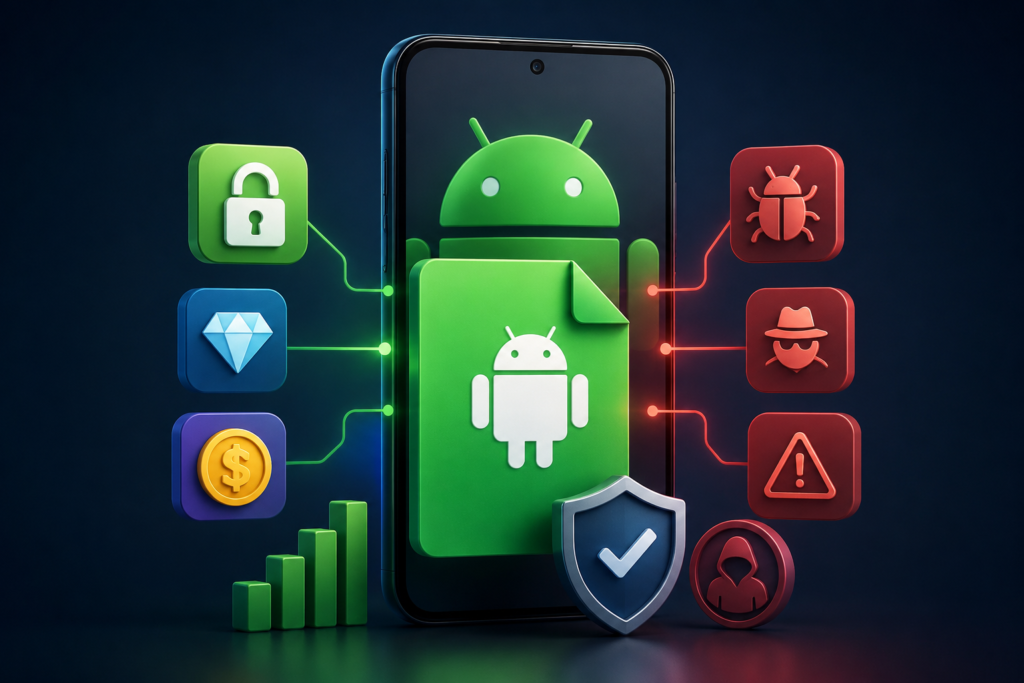
Google considers various behaviors when determining whether an app violates Play policies.
Examples include:
- Malware
- Spyware
- Fraudulent financial behavior
- Fake identity or impersonation
- Phishing attempts
- Misleading subscription practices
- Harmful code
- Privacy violations
- Excessive permission abuse
- Deceptive advertisements
Not every buggy app is unsafe.
A poorly designed game that crashes frequently may simply have software issues. An unsafe app intentionally or negligently puts users, devices, or personal information at risk.
How to Report an Unsafe App
Reporting an app is straightforward.
Step 1
Open Google Play Store.
Step 2
Search for the app.
Step 3
Open the app’s page.
Step 4
Locate the reporting option (such as Flag as inappropriate), which may vary slightly depending on your Play Store version.
Step 5
Choose the most appropriate reason.
Examples may include:
- Harmful to device or data
- Inappropriate content
- Fraud
- Impersonation
- Spam
- Other policy violations
Step 6
Provide additional details if requested.
Keep your explanation factual.
Instead of writing:
“This app is terrible.”
Write something like:
“The app advertises free VPN access but immediately redirects users to paid subscription screens without providing the advertised service.”
Clear reports are generally more useful during Google’s review process.
When You Should Use Google’s Dedicated Reporting Forms
The in-app reporting option is suitable for most users.
However, some situations require Google’s dedicated reporting systems, including:
- Copyright infringement
- Trademark abuse
- Privacy complaints
- Legal issues
- Child safety concerns
- Developer policy violations
Google’s reporting and appeals system allows these more specific reports to be reviewed through dedicated channels.
What Happens After You Submit a Report?
Many people expect immediate action.
In reality, Google may:
- Review the report manually.
- Compare it with other user reports.
- Analyze the app automatically.
- Contact the developer.
- Request changes.
- Suspend updates.
- Remove the app.
- Disable the developer account for serious or repeated violations.
You usually will not receive detailed updates about the investigation.
This sometimes leads users to believe their report was ignored, even when Google is actively reviewing it.
Real-Life Examples
Example 1: Fake Banking App
A banking app copies another bank’s logo and asks users to enter account credentials.
This should be reported immediately because it may be attempting phishing.
Example 2: Subscription Trap
A wallpaper app claims to be free but secretly starts an expensive recurring subscription after a short trial without making the pricing clear.
This can be reported as deceptive behavior.
Example 3: Excessive Permissions
A calculator requests:
- Camera
- Contacts
- SMS
- Phone calls
- Location
While there may occasionally be legitimate reasons, such broad access is unusual for a basic calculator and deserves closer inspection before granting permissions.
Key Signs an App May Be Unsafe
Look for combinations of warning signs rather than relying on a single indicator.
Examples include:
- Very few downloads but thousands of suspicious five-star reviews
- Poor grammar throughout the app description
- Frequent complaints in recent reviews
- Requests for unrelated permissions
- Missing privacy information
- Developer information that appears incomplete or inconsistent
- Numerous pop-up ads immediately after installation
One warning sign alone does not prove an app is malicious, but several together should make you cautious.
Benefits of Reporting Unsafe Apps
Reporting helps more people than just yourself.
It can:
- Reduce scams
- Protect children’s devices
- Prevent malware from spreading
- Improve Play Store quality
- Help Google identify policy violations faster
Even if your single report does not trigger immediate removal, it may contribute to a broader pattern that leads to action.
Hidden Limitations of Reporting
Reporting is useful, but it has limitations.
Google receives enormous numbers of reports every day.
That means:
- Investigations may take time.
- Not every reported app is removed.
- Some reports are dismissed if there is insufficient evidence.
- Developers may appeal enforcement decisions.
This does not necessarily mean Google ignored your report.
Safety Analysis
Before installing any Android app, consider these questions:
- Does the app come from a recognizable developer?
- Does the download count seem reasonable?
- Are recent reviews discussing scams?
- Does the app request excessive permissions?
- Does Play Protect show warnings?
Google Play Protect continuously scans apps already installed on your device and may warn you if an app becomes potentially harmful later.
Privacy Analysis
Many unsafe apps focus more on collecting personal information than damaging the device itself.
Review:
- Data Safety section
- Permissions requested
- Privacy Policy
- Developer website
Remember that the Data Safety information is supplied by developers. While Google has policies around accurate disclosures, users should still evaluate permissions and app behavior rather than relying solely on those labels.
Performance Review
Unsafe apps often affect performance before users notice security problems.
Common symptoms include:
- Faster battery drain
- Device overheating
- Unexpected background activity
- Higher mobile data usage
- Slower performance
- Frequent advertisements
These symptoms can have other causes too, but if they begin immediately after installing a new app, it’s worth investigating.
Comparison With Alternatives
If an app appears suspicious, don’t assume you must keep using it.
Consider switching to:
| Option | Advantage |
|---|---|
| Well-known developer | Usually better support and transparency |
| Open-source apps | Source code may be publicly reviewed |
| Popular alternatives | More user feedback and security scrutiny |
| Official company apps | Lower impersonation risk |
Choosing a reputable alternative is often safer than waiting to see whether a questionable app improves.
Expert Recommendations
Security professionals generally recommend a few simple habits:
- Install apps only when necessary.
- Review permissions before granting access.
- Keep Play Protect enabled.
- Read recent reviews instead of only looking at the star rating.
- Update apps regularly.
- Remove apps you no longer use.
These habits reduce risk even if an unsafe app slips through initial review.
Common Mistakes
Ignoring permissions
Many users accept every permission without reading it.
Assuming high ratings guarantee safety
Ratings can be manipulated or may reflect an earlier version of the app.
Disabling Play Protect
Some users turn it off to install apps from outside Google Play, reducing an important layer of protection.
Reporting without details
A vague report provides little information for investigators.
Specific facts are much more helpful.
Frequently Asked Questions
Can I report an app anonymously?
Google does not publicly reveal who reported an app. Depending on the reporting method, some forms may request contact details for follow-up or legal reasons.
Will Google remove every reported app?
No. Google investigates reports and removes apps only when they violate applicable policies.
Can I report fake reviews?
Yes. Google allows users to report inappropriate reviews as well as problematic apps.
Should I uninstall an app before reporting it?
If you believe it is harmful, uninstalling it after submitting your report is usually the safest option, especially if Google Play Protect has warned about it.
Does reporting affect my Google account?
No. Reporting suspected policy violations does not negatively affect your account.
What if the app is stealing money?
Cancel any unwanted subscriptions, contact your payment provider if necessary, secure your accounts by changing passwords where appropriate, and report the app to Google immediately.
Final Verdict
Reporting unsafe apps on Google Play is one of the simplest ways users can contribute to a safer Android ecosystem. While Google uses automated systems like Play Protect alongside human review, user reports remain an important signal for identifying apps that may violate policies or put people at risk.
If an app looks suspicious, avoid assuming someone else has already reported it. Check its permissions, read recent reviews, use Play Protect, and submit a clear, factual report through the Play Store or Google’s dedicated reporting channels when appropriate. Even if action is not immediate, accurate reports help Google investigate patterns of abuse and improve the safety of Google Play over time.
More Articles You May Like