A Google Pay screenshot does not prove that money reached your account. The sender’s phone may show an edited image or a simulated payment screen. Confirm the credit using your own app and bank records before treating an order as paid.
This guide is for Google Pay users in India who need to check a receipt, investigate a missing payment or report suspicious activity. It does not provide a fake Google Pay APK or a receipt generator.
Check the payment in your own account
- Open your installed Google Pay app yourself and find See transaction history. Select the relevant payment if it appears there.
- Compare its amount, date and UPI transaction reference with the credit in the receiving bank account. Use your bank’s app, internet banking or statement.
- Check which account the sender intended to pay. Google Pay can be used with different UPI IDs and bank accounts; do not assume a familiar phone number identifies the intended destination.
- If you cannot match the records, use official support to investigate before handing over goods or accepting a refund request.
Google’s bank-statement guidance explains matching the UPI transaction ID and amount between Google Pay and the bank record. A reference printed on a screenshot is useful information for an enquiry, but it is not independent proof that a credit exists.
Does the sender need to use Google Pay too?
No. Google’s receiving-money guidance says a sender can scan your Google Pay QR code using any UPI app. Check the receiving account associated with the UPI details you shared. The sender’s choice of app, by itself, does not establish whether a payment is genuine.
What if “successful” appears only on the sender’s phone?
Ask for the transaction reference and check your own records. If the records disagree or the payment is pending, treat it as unresolved and contact the payment service or bank. A temporary problem should not automatically be described as fraud, and repeated transfers can complicate a duplicate-payment dispute.
A balance screenshot is particularly unhelpful: it shows a claimed balance, not evidence of the specific transfer to you. Fonts, colours, a tick mark and a familiar logo also cannot authenticate a receipt.
Never enter a UPI PIN just to receive money
Google’s fraud-prevention guidance states that receiving money does not require entering your UPI PIN. A request telling you to enter that PIN to collect a prize, refund or incoming payment is a reason to stop and check what action you are authorising.
Keep your PIN and login OTP private. Reach customer support through Help or Support inside Google Pay instead of calling a number from an unsolicited message or an unverified search result.
Report a suspicious user or lost money
- Save the conversation, alleged receipt, payment reference, amount and date. Keep any relevant order and bank records.
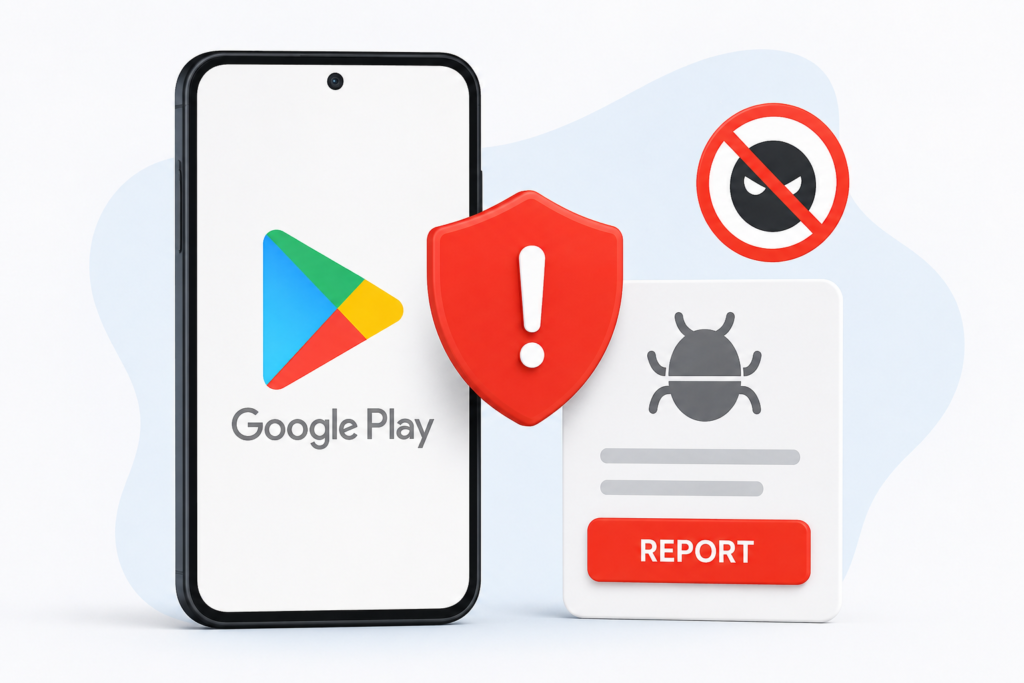
- To report a user in Google Pay, open their profile, select More and choose Report user. For a transaction issue, use the app’s support options.
- If you suspect financial fraud, inform your bank promptly. In India, call 1930 or report through the National Cyber Crime Reporting Portal.
- Keep complaint references for follow-up. Do not pay someone who promises guaranteed recovery for an advance fee.
Reporting an account and recovering a payment are different processes. A report does not guarantee that funds will be returned. For an individual dispute, the relevant service, bank and authorities need to investigate the records.
How to Uninstall a Suspicious Payment App
If you installed an imitation payment app, preserve useful payment references and evidence of the download before removing it. Open Android Settings → Apps, select the suspicious app and choose Uninstall. Use Google Play Protect to review device security, and contact your bank promptly if you disclosed financial credentials. Removing an app does not reverse a transfer or settle a complaint.
More Articles You May Like