Source review: 18 October 2026. Updated using public official documentation. This is not a hands-on app test or a report of a personally witnessed incident.
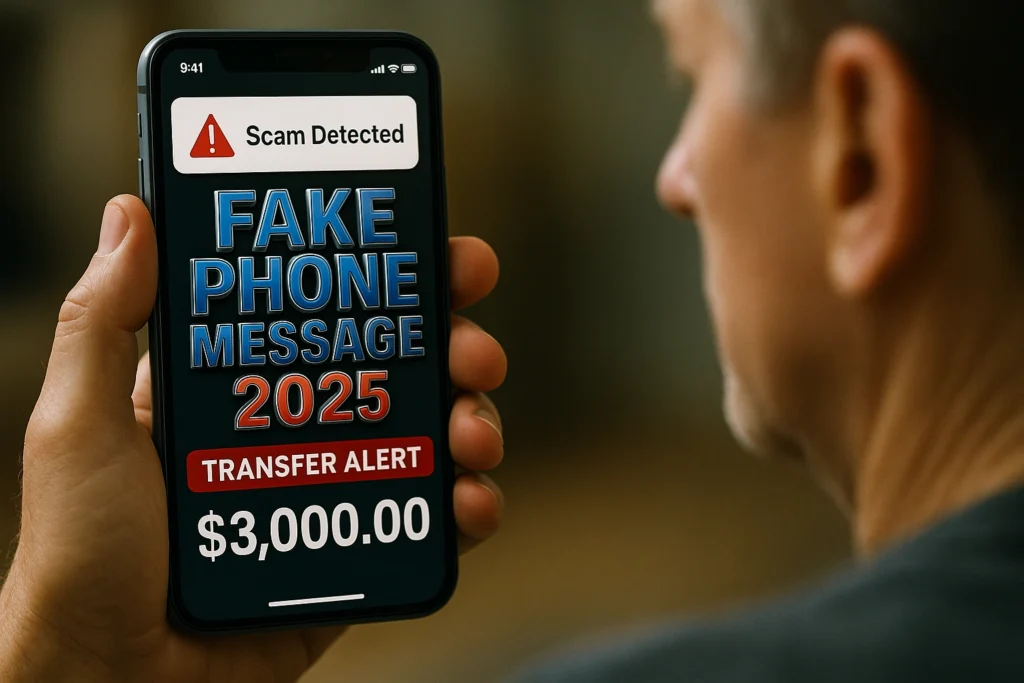
A fake PhonePe message may claim that you received money, need an urgent account update, or must act to collect a refund. A familiar name in a message is not enough to establish the sender or the payment. Check the claim through an independently opened, trusted app or account.
At the same time, an unusual message is not automatically fraudulent. The useful response is to pause, verify the specific claim and avoid giving the sender new access. This guide covers SMS and similar payment-related messages without supplying fake-message templates or generators.
The earlier article included unsupported incident examples and broad legal assertions. Those have been removed. This page explains a practical verification process; it does not determine the identity or legal liability of an individual sender.
Quick overview
| Message claim | Safer response |
| Money received | Check the matching credit in your own account |
| Account blocked | Open the genuine app independently |
| Refund needs a PIN | Do not share a PIN or follow the sender’s payment instructions |
| Install an APK to continue | Do not use an unsolicited installer |
| Money has been lost | Contact provider and bank; report suspected financial fraud promptly |
Contents: Read the claim without following its instructions · Verify payment alerts in your own records · Protect codes, PINs and device access · What to do after clicking a suspicious link · Block, report and preserve useful evidence · FAQ: unusual messages and real account checks · Uninstall an unwanted app and review accounts
Read the claim without following its instructions
First identify what the message is asking you to do. A message announcing payment is different from one asking for account access or installation. Write down the claimed transaction, amount or problem before deciding whether any action is necessary.
Do not use the message’s link or callback number as your only route to verification. Open the genuine app yourself or use a support channel reached through the provider’s official website. This separates the account check from the sender’s instructions.
Pressure is a reason to slow down. A short deadline, repeated calls or a demand to keep the conversation secret should not replace an independent check. You do not need to argue with the sender or prove that you recognised a scam.
Verify payment alerts in your own records
If the message says money arrived, look for the matching transaction in the correct payment or bank account. Check the amount and time as well as the status. Do not transfer a claimed excess payment back before establishing that the original credit exists.
If a record is missing, call the payment unverified while you investigate. A notification delay or an account mismatch should not be presented as conclusive evidence of fraud. Ask the provider about inconsistent records using its genuine support route.
If the message concerns a purchase, keep the order reference with the verification result. This is especially useful when several customers pay similar amounts. A screenshot of a message can preserve a claim, but it cannot establish that money reached the intended account.
Protect codes, PINs and device access
PhonePe’s social engineering guidance warns about impersonation and pressure around account problems and refunds. Do not disclose OTPs or UPI PINs to a sender. Receiving cashback or a refund does not require you to tell someone your PIN.
PhonePe also warns about SMS-forwarding apps in spoofing-related fraud. Do not install an unsolicited app or enable forwarding simply because a message calls it a verification step. A service name printed in the request is not an authentication check.
Keep conversations about support separate from remote control of your phone. If someone asks to view the screen or approve a new payment request, stop and contact the provider independently. Read each actual payment or mandate screen before authorising anything; a caller’s description may not match it.
What to do after clicking a suspicious link
Close the page and note what actually happened. Merely opening a link is different from downloading an app, entering a password or authorising a transfer. Avoid assuming either that nothing matters or that every account is definitely compromised.
If you entered credentials or granted access, secure the affected account using its genuine recovery process. Explain the exposure to official support. Use another trusted device if you cannot rely on the affected phone, and avoid returning to the suspicious page to change credentials.
If an installer was downloaded, do not open it to inspect its promised features. Keep the source message and relevant file details for a report without redistributing the file. If it was installed, review removal and account-security steps rather than relying on deleting the SMS alone.
Block, report and preserve useful evidence
Google Messages documents blocking a conversation by touching and holding it on the home screen, choosing Block and confirming. Device and app versions may differ. Review any separate spam-report option before sending a report, and keep needed evidence first.
For a payment-account concern, contact PhonePe through its genuine Help or support website. For suspected financial cyber fraud in India, call 1930 promptly and use the National Cyber Crime Reporting Portal. A report is not a promise of reimbursement.
Save the message, sender details, time, transaction reference if any, and a short account of what you did. Keep OTPs and full account details out of public posts. If support requests evidence, supply it through the official case instead of replying to the suspicious sender.
Blocking stops contact through that channel; it does not repair an exposed account or reverse a transfer. Continue the relevant support case and record the acknowledgement. If a sender switches numbers, do not resume the conversation simply because the display name changes.
FAQ: unusual messages and real account checks
Is every unfamiliar sender a fraudster? No. Verify the claim without trusting the message alone.
Can a payment message prove a transfer? It is a prompt to check your own records, not sufficient proof by itself.
Should I reply with an OTP to stop messages? No. Do not disclose authentication codes to the sender.
Does deleting the SMS remove an installed app? No. Message deletion, software removal and account recovery are separate actions.
Uninstall an unwanted app and review accounts
If the message led you to install an unwanted app, preserve useful evidence and stop using it. Google’s Android help describes removal through Play Store, profile, Manage apps & devices, Manage, selecting the app and Uninstall. Use official device help if removal is blocked.
Keep Play Protect enabled and follow its warnings. A scan result does not replace checking whether you disclosed credentials or approved a transaction. Those exposures need their own account or bank response even after software is removed.
Finally, return to the original claim through your trusted account: was there a real payment, a real account notice or no matching event? Keep the case open with support if the answer remains unclear. This closes the verification loop without letting a suspicious message control the process.
Sources and update policy
Official sources reviewed: PhonePe social engineering guidance; PhonePe SMS spoofing guidance; Block conversations in Google Messages; Google Play Protect; Android uninstall help; PhonePe support; National Cyber Crime Reporting Portal.
We revise this guide when verified documentation changes or a correction is needed. App features and support screens can vary by version, device and region. We distinguish publisher claims from our practical guidance and do not invent tests, incidents or guarantees. This page is informational; contact the relevant provider or authority for an individual case.
More Articles You May Like